
We’ve been trained to think about the MLB season in categorized chunks, however the MLB season is built on Moments, not milestones.
Opening Day. The All-Star Break. The Trade Deadline. October.
They’re clean. Easy to plan around. Easy to build campaigns against.
They’re also not where most of the opportunity lives.
Enter Data Skrive and how we approach Real-Time Sports Marketing
Baseball doesn’t really move in milestones. It moves in moments. A midweek series in June. A 2–1 count in the seventh. A pitching change that feels routine until it suddenly isn’t.
If you’ve spent any time watching closely, you’ve felt this. The biggest spikes in attention don’t show up because the calendar says they should. They show up when something shifts inside the game.
That shift is what drives real-time engagement, and it’s what most of the industry still misses.
The tentpoles still matter, of course. The MLB postseason continues to pull some of the largest audiences in the sport, with the 2025 postseason averaging over 6 million viewers and the World Series pushing well past that for key games. The All-Star Game still brings in a national audience, even if it’s settled into a lower range than it once held.
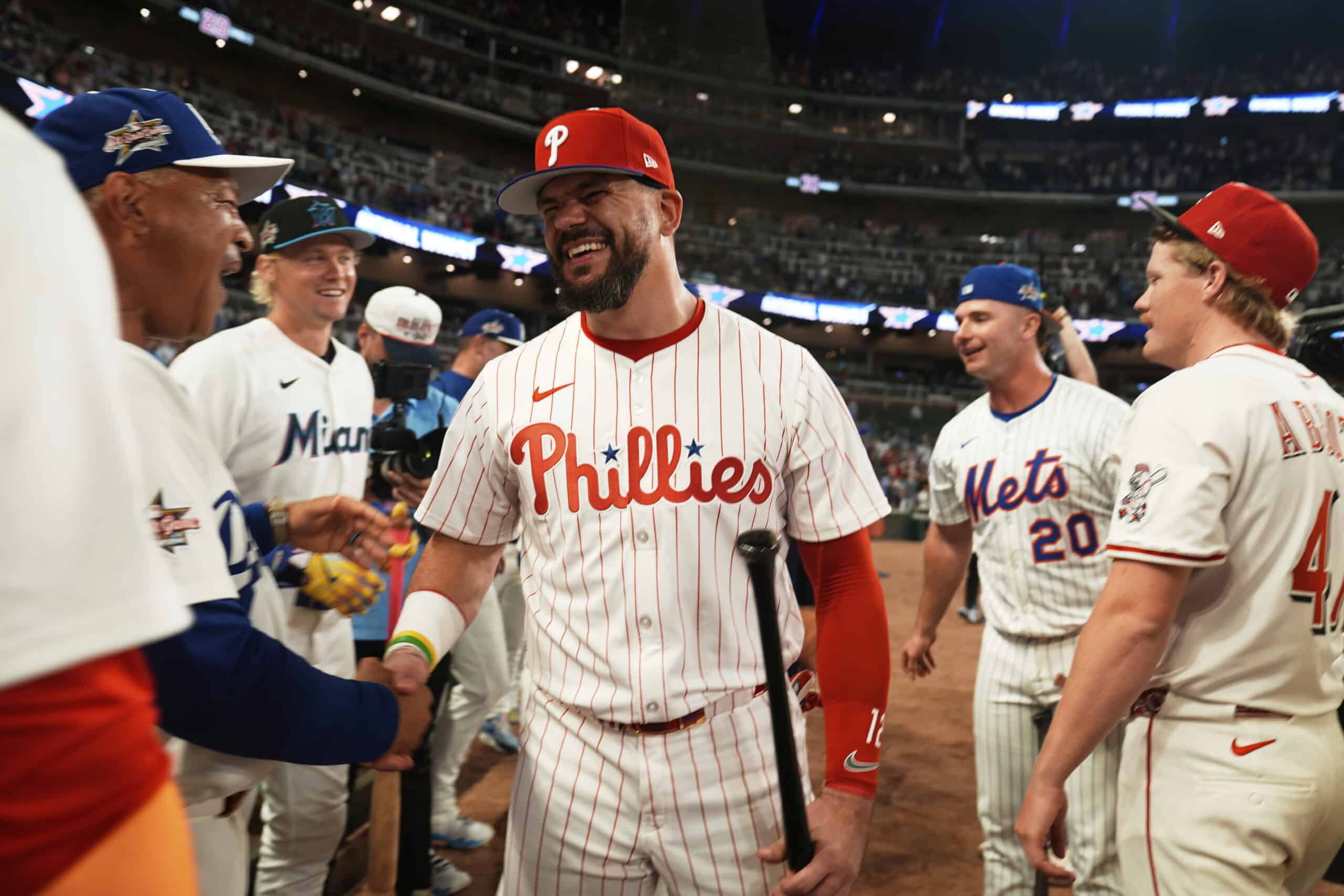
Philadelphia Phillies Kyle Schwarber celebrates after winning the tiebreaker at the MLB baseball All-Star game between the American League and National League, Tuesday, July 15, 2025, in Atlanta. (AP Photo/Brynn Anderson)
Those moments are visible. They’re easy to rally around. But they’re isolated.
There are more than 2,400 regular season games every year. That’s a system constantly producing smaller, high-impact moments, most of which never show up on a marketing calendar.
And those are the moments that actually drive behavior.
Most sportsbook marketing still operates like the calendar is in control.
Pre-game promos. Scheduled pushes. Generic live betting alerts.
All of it assumes fans engage in predictable windows. They don’t.
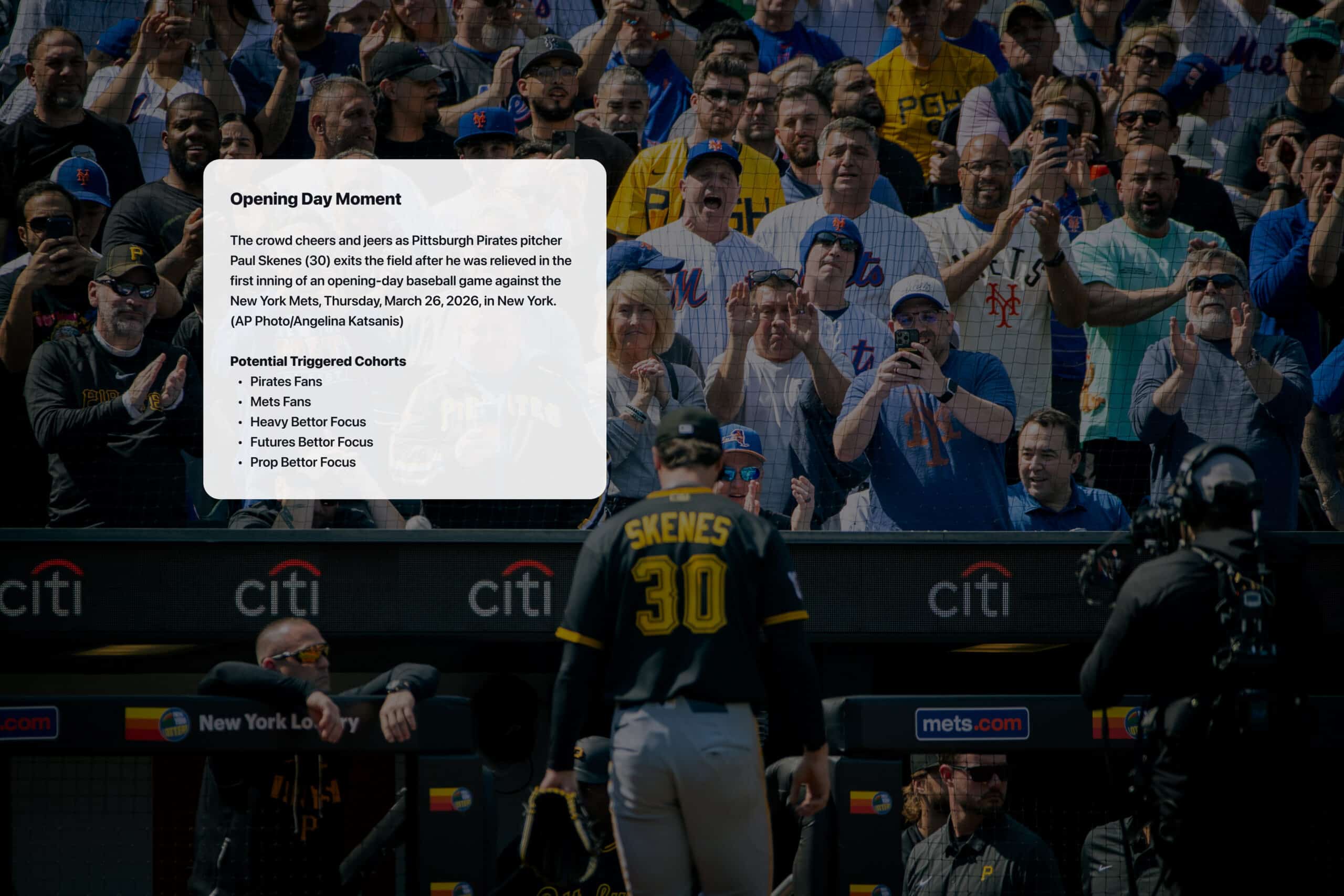
Engagement spikes happen fast, usually right when something meaningful is about to happen, or just happened. You can see it in search behavior, social activity, and app usage. By the time most notifications go out, the moment has already started to fade. Odds have shifted. The emotional peak has passed. Attention has moved on.
At that point, you’re reacting to the moment instead of capturing it. That gap is where real-time sports marketing becomes valuable.
What makes this interesting is that a moment doesn’t actually start with the outcome.
It starts just before it.
You can feel it building. A pitcher loses a bit of velocity. Command slips slightly. A hitter starts making better contact. The game tightens, late innings, small margin, everything compressing. Nothing has happened yet, but the context is changing.
Most systems wait for confirmation, the home run, the strikeout, the final result. By then, the window has already shifted. The value in that moment has already started to decay.
The real opportunity sits in the seconds before it becomes obvious.
If you map fan behavior against that timeline, the pattern is pretty clear.
Attention spikes almost instantly when something meaningful is about to happen or has just happened. Most activation still lags behind that curve, even if it’s only by a few moments.
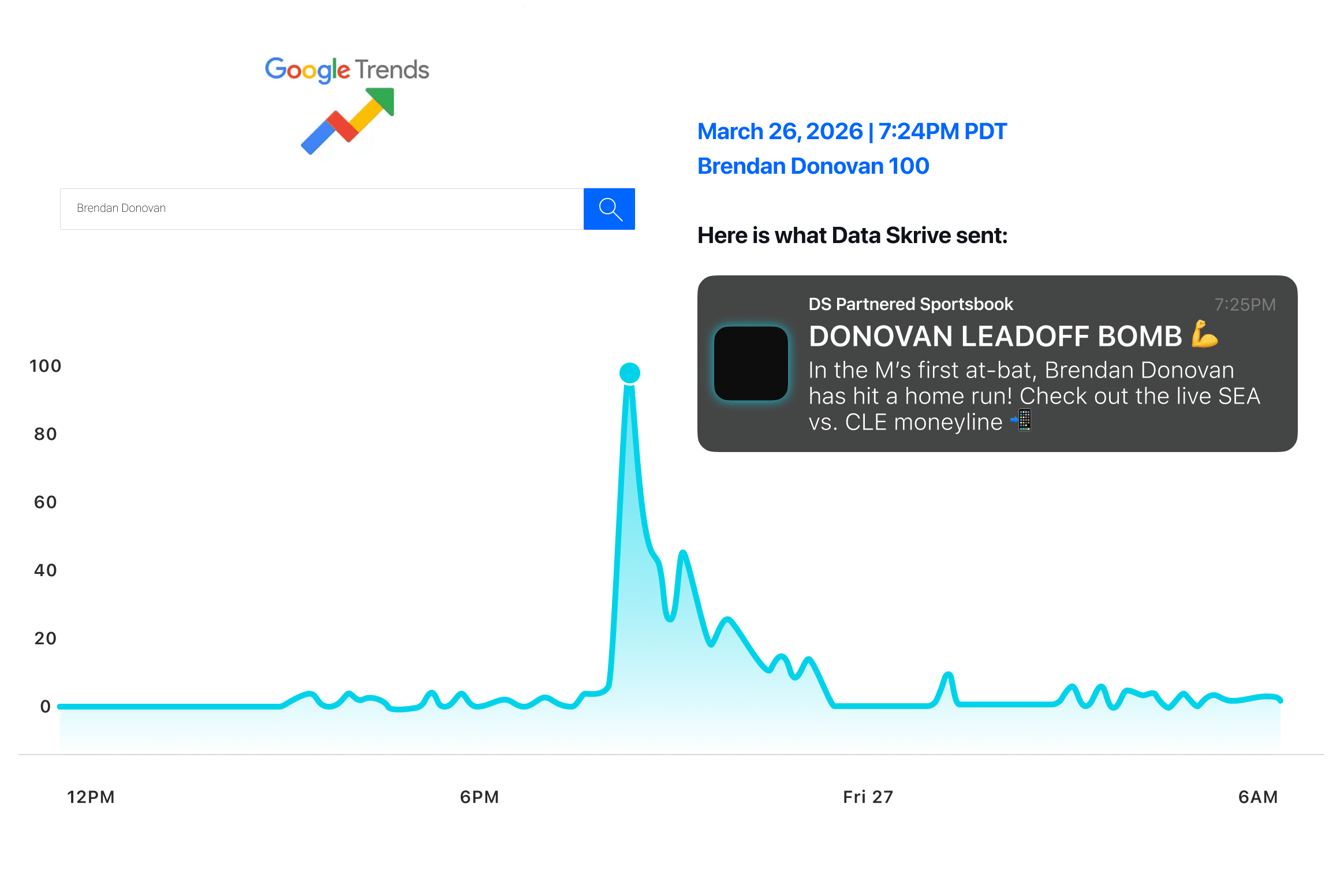
Data Skrive capitalizes on the small window relevant time you have to capture your audience by having triggered events waiting to be deployed as they happen in real time to match your campaigns.
| Platform Engaging On | Relevancy Timing Window |
| 75-90mins | |
| Search | 30-60mins |
| Social | 10-15mins |
| Push | 2-5mins |
That’s enough to matter.
In-play betting now makes up more than half of wagers in many markets. Engagement rises with emotion, but timing determines whether you’re part of that moment or arriving after it.
Activate late and you’re one of many.
Activate early and the window is yours.
This is where real-time sports marketing starts to shift.
Faster reactions help, but the real advantage comes from recognizing when a moment is forming in the first place.
That means paying attention to the signals inside the game. When a matchup starts to tilt, when performance trends begin to change, or when pressure builds in a way that suggests something is about to happen.
The focus moves toward identifying when something is about to matter, rather than waiting to respond after it does.
We’ll always talk about Opening Day and October baseball. Those moments deserve the attention they get.
But they’re not where most engagement is won.
That lives in everything between them. The random Tuesday night game. The overlooked series. The at-bat that doesn’t look like anything until it suddenly is.
The teams and platforms that win in this space aren’t waiting for the calendar to tell them when something matters.
They’re recognizing it in real time, just before everyone else does.